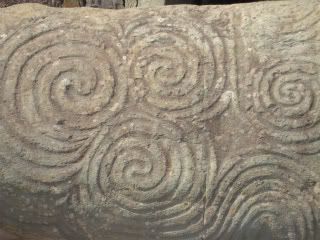
19 de Mhí na Márta
I appear to be chiming in a bit late (as usual with these things), but am still striking off of an appropriate note as I'm enjoying my public holiday off of work since St. Paddy's fell on a Saturday this year. Around this time generally everything "Irish" appears in all sorts of headlines, and current news topics. Aside from the general stigma attached to American celebration of the day in the States chalk full of false stereo-types, that can even qualify as racism&discrimination, leading the boozefest in a general day ignorant of anything relating to actual Irish culture. I understand this pretty well coming from a city that has such big "Irish-American" festivities for it, and yes, was part of the sub-culture I was raised with.
This is however nothing new to me, but my current focus is the way the day is treated within "pagan" communities. The same sort of disassociation that you may see among the native&secular Irish, you also find within the pagan community, especially those following "Celtic" paths. The big reasons are usually for one, despite the normal piss up of a celebration with sin and debauchery, the festival is a primarily Christian religious one in origin. Going deeper, the feast day of Ireland's patron saint happens to be the saint most linked to the Christianisation of Ireland, not something your typical pagan would want to celebrate eh? We've all heard the modern lore of good auld St. Paddy driving the "snakes" from the island, snakes of course assumed to be a metaphor for either the general pagan inhabitants, or druids, but history is a funny creature in itself. Actual events, supposed events, and our understanding of them are often distorted, so if we're going to adopt such serious attitudes towards popular celebrations in modern culture, I guess it would be wise to at least understand them.
First of all. St. Paddy wasn't the first Christian, or missionary in Ireland. The first known Bishop was Palladius. It's important to understand Ireland's conversion to Christianity was relatively embraced and peaceful to a certain extent. The pseudo-history in the hagiographies featuring Patrick in "magical combat" with druids are likely made up to resemble Biblical stories like that of Simon Magus, but of course in the guise of encouraging belief in Christ. We actually owe a debt of gratitude to the church for recording our myths, which even though monks re-worked with their own twist, made it possible for them not to be lost in time. In regards to myths, other than the two main early sources we have of St. Patrick, mainly his Confessio, and letter to the soldiers of Coroticus, it's a possibility the man as we know him may not have even existed.
Now the "Snakes" right? It is well known there have never been snakes in Ireland. Either they didn't survive the last Ice age, or didn't have the right environment to migrate when there was a land-brdge. The whole bit of lore with Paddy&snakes was written by Anglo-Normans in the Middle ages. It was stated in some of his earlier biographies that he studied at the Lérin's monastery off the south coast of France founded by St. Honoratus, who was said to have banished all the snakes from Aralanensis. The Anglo-Norman writers must have liked that association, and since there were pre-existing tales of Paddy banishing demon-birds, and monsters into lakes, they penciled that one in under him as well. His role as a missionary in Ireland, and lore involving supposed encounters with druids likely lead to the symbolic association of pagans&snakes in modern folklore, but we do in fact know that the last pagan High-King in Ireland to be sworn in under the ban-feis rite at Tara, Diarmait mac Cerbaill, did so well over 100 years after Paddy's death in the 6th century, and pre-christian religious practices would have taken longer to wane generally from then.
Therefore if "All Snakes Day" is taking the piss out of modern folklore, then fair play to it, but there shouldn't be any more need in the pagan community to disassociate with the secular celebration of the day. If anything the stereo-types alone would make more sense in reducing an island with the second oldest vernacular in Europe, had a church that lead the rest of Europe throughout the Dark Ages, and has given such beauty, music, and amazing poets&literature to the rest of the world as a need for lack of acknowledgment. The day can also be seen as one of national pride, or by the diaspora as one to honour those that left their home, family, and language behind in order to face oppression& discrimination in becoming "Good Americans." That has usually been the case for me, so on that note, Lá Fhéile Phádraig shona daoibh!
Monday, 19 March 2012

Saturday, 11 February 2012
Féile Bríd
Dé Sathairn 11 de Mhí Feabhra 2012
Bhuel Lá Fhéile Bríd go déanach! I've been meaning to get something up earlier for this(as well as many other things that succumb to internet procrastination, but found the right wee bit of time being an early morning Saturday insomniac. I was going to create a post called "Christian Appropriation" to explore common debates aroound this time such as syncretic Christian iconography adopted into Pagan practices, but perhaps that'll do for another time. In the mean time, thought I'd share something I had written before in spirit of the occasion.
Brighid, Briganti, Brigit, Briga, e.t.c is a Celtic Goddess, and Irish Saint, whose parallel comes up frequently in topics focused on Paganism and Christianity. That parallel is what I intend to focus on, so just briefly touching on the nature of this Goddess...
The etymology of her name literally means "exalted one", a pseudonym that Celtic inhabitants around high hills used for their mother-goddess.(Briganti) This Goddess was the sovereign Goddess said to give her name to Britain, and the famed tribe that controlled central Britain based around the Pennine Hills called the Brigantes, with Briganti their principal Goddess. Off-shoots of this tribe settled in the south-east of Ireland around the 1st century A.D. Many scholars believe that her cult was brought to Ireland with these settlements, with Brigit (Brighid) being her Irish adaptation.
In the myths and literacy creations, Brighid is a Poetess of the Tuatha Dé Dannan, and daughter of the Daghdha, with two sisters of the same name. She was a guardian-goddess of domestic animals, and patroness of smithcraft and poetry. A 9th century glossarian wrote that, "among all the Irish, a goddess used to be called Brigit." A few Irish rivers were given the name Brighid, along with many hills called Brí. It was said that Brigh was the first to weep and shreik to the dead, being a defender of the Laigin(Leinster), terrifying enemies appropriate for a territorial sovern goddess. This indicates that like Danu and Mór-Ríoghain, Brighid was another aspect of the mother-goddess in Ireland.
St. Brighid, Brigit, Bríd, of the Fotharta, Mary of the Irish/ Muire na nGael, is an Irish saint reputed to have lived C. AD 439-524, however practically nothing historical is known about her. Her cult had political importance with the rise of the Uí Dhúnlaige Leinster sept, so a Latin biography called Vita Brigitae was written in 650 by a cleric under the pen name Cogitosus.A shocking feature to many scholars about the text is the lack of any historical information about Brighid who supposedly lived a century earlier. It's mostly composed of miracles such as multiplying crops&stock, healing the sick, and even changing the weather(akin to rumoured feats of druids, and prayers to the Goddess Brighid) and the importance of Kildare. Not only does the saint share her name with the Goddess Brighid, but it's highly coincidental that her feast day, Lá Fhéile Bhríd, falls on the same date as Oímelc(Imbolg), the pagan festival of spring and turning point of the Celtic year, also connected with the goddess. Oímelg is taken to mean "in the belly", connected with lactation, and ewes milk. Is associated with the birth of farm animals in which the saint and goddess also happen to be patronesses of.
Kildare itself, Irish Cill Dara, means "Church of the Oak tree." This suggests that the site was a sacred pagan one, by the presence of oak groves sacred to the people we now refer to as "druids", and some accounts even state Brighid was the daughter of a druid. As F.J Byrne stated in Irish Kings&High-Kings, It's sceptical to doubt the existence of an actual Christian Saint of Kildare, but it's likely that a holy woman of the Fotharta Christianised a pagan sanctuary at Kildare, and borne the name Brighid, common among druidresses. The synthesis between Paganism and Christianity would have met less resistance under the name of Brighid, and much of Saint Brighid's lore contains elements of druidic practices keen for Christian propaganda. It's widely believed that the goddess's presence in the Gaelic mind was so strong, she was simply canonised as a saint.
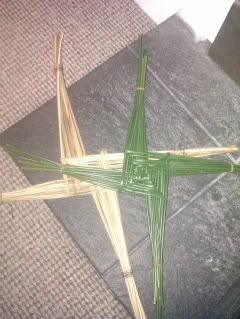
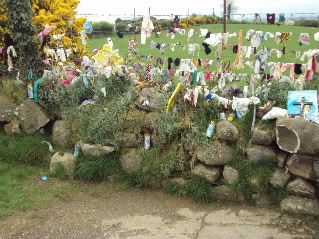
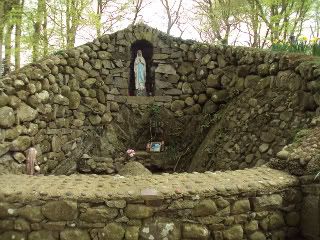
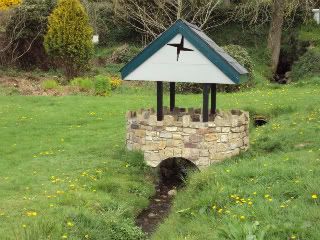
Her cult was prominent in Leinster, and south Ulster, especially in Kildare and Faughart(where some sources even claim to be her birth), and much of her lore even spread to Scotland and Wales. Kildare and Faughart are still rich with her lore. Folk customs, especially on Febrary 1st like solar&St. Bríde's crosses (cróssog na Bríd), maintain lines to the Goddess Brighis, and well as being the feast of the Saint. Outdoor shrines, especially around sacred spriongs, as well as offerings and well dressings are all remnants of Ireland's pagan past, and living traditions of both Pagan and Christian Gaelic Traditionalists, as you can see here in the pics we took of her shrine at Faughart, Co. Louth...
Bhuel Lá Fhéile Bríd go déanach! I've been meaning to get something up earlier for this(as well as many other things that succumb to internet procrastination, but found the right wee bit of time being an early morning Saturday insomniac. I was going to create a post called "Christian Appropriation" to explore common debates aroound this time such as syncretic Christian iconography adopted into Pagan practices, but perhaps that'll do for another time. In the mean time, thought I'd share something I had written before in spirit of the occasion.
Brighid, Briganti, Brigit, Briga, e.t.c is a Celtic Goddess, and Irish Saint, whose parallel comes up frequently in topics focused on Paganism and Christianity. That parallel is what I intend to focus on, so just briefly touching on the nature of this Goddess...
The etymology of her name literally means "exalted one", a pseudonym that Celtic inhabitants around high hills used for their mother-goddess.(Briganti) This Goddess was the sovereign Goddess said to give her name to Britain, and the famed tribe that controlled central Britain based around the Pennine Hills called the Brigantes, with Briganti their principal Goddess. Off-shoots of this tribe settled in the south-east of Ireland around the 1st century A.D. Many scholars believe that her cult was brought to Ireland with these settlements, with Brigit (Brighid) being her Irish adaptation.
In the myths and literacy creations, Brighid is a Poetess of the Tuatha Dé Dannan, and daughter of the Daghdha, with two sisters of the same name. She was a guardian-goddess of domestic animals, and patroness of smithcraft and poetry. A 9th century glossarian wrote that, "among all the Irish, a goddess used to be called Brigit." A few Irish rivers were given the name Brighid, along with many hills called Brí. It was said that Brigh was the first to weep and shreik to the dead, being a defender of the Laigin(Leinster), terrifying enemies appropriate for a territorial sovern goddess. This indicates that like Danu and Mór-Ríoghain, Brighid was another aspect of the mother-goddess in Ireland.
St. Brighid, Brigit, Bríd, of the Fotharta, Mary of the Irish/ Muire na nGael, is an Irish saint reputed to have lived C. AD 439-524, however practically nothing historical is known about her. Her cult had political importance with the rise of the Uí Dhúnlaige Leinster sept, so a Latin biography called Vita Brigitae was written in 650 by a cleric under the pen name Cogitosus.A shocking feature to many scholars about the text is the lack of any historical information about Brighid who supposedly lived a century earlier. It's mostly composed of miracles such as multiplying crops&stock, healing the sick, and even changing the weather(akin to rumoured feats of druids, and prayers to the Goddess Brighid) and the importance of Kildare. Not only does the saint share her name with the Goddess Brighid, but it's highly coincidental that her feast day, Lá Fhéile Bhríd, falls on the same date as Oímelc(Imbolg), the pagan festival of spring and turning point of the Celtic year, also connected with the goddess. Oímelg is taken to mean "in the belly", connected with lactation, and ewes milk. Is associated with the birth of farm animals in which the saint and goddess also happen to be patronesses of.
Kildare itself, Irish Cill Dara, means "Church of the Oak tree." This suggests that the site was a sacred pagan one, by the presence of oak groves sacred to the people we now refer to as "druids", and some accounts even state Brighid was the daughter of a druid. As F.J Byrne stated in Irish Kings&High-Kings, It's sceptical to doubt the existence of an actual Christian Saint of Kildare, but it's likely that a holy woman of the Fotharta Christianised a pagan sanctuary at Kildare, and borne the name Brighid, common among druidresses. The synthesis between Paganism and Christianity would have met less resistance under the name of Brighid, and much of Saint Brighid's lore contains elements of druidic practices keen for Christian propaganda. It's widely believed that the goddess's presence in the Gaelic mind was so strong, she was simply canonised as a saint.
Her cult was prominent in Leinster, and south Ulster, especially in Kildare and Faughart(where some sources even claim to be her birth), and much of her lore even spread to Scotland and Wales. Kildare and Faughart are still rich with her lore. Folk customs, especially on Febrary 1st like solar&St. Bríde's crosses (cróssog na Bríd), maintain lines to the Goddess Brighis, and well as being the feast of the Saint. Outdoor shrines, especially around sacred spriongs, as well as offerings and well dressings are all remnants of Ireland's pagan past, and living traditions of both Pagan and Christian Gaelic Traditionalists, as you can see here in the pics we took of her shrine at Faughart, Co. Louth...
Wednesday, 28 December 2011
R.I.P Dáithí Ó hÓgáin
Dé Céadaoin 28 de Mhí naNollag
I've been meaning to find the time to get around to make an article in dedication to the late Dáithí Ó hÓgáin who I unfortunately heard passed away the other week when listening to the news on RTÉ Raidió na Gaeltachta.
One of my favourite authors in regards to Irish scholarship which includes pre-Christian myths, legends, and religion. Dáithí was a professor of Irish Folklore at University College Dublin, and was awarded the Irish Fleadh Cheoil na hÉireann award Ard Ollaibh for lifelong service towards Irish traditions. I unfortunately never got the chance to meet the man, but always held him in high regard knowing that he had given talks during the Save Tara campaigns, as well as the Cruachan Aí Heritage Centre in Roscommon. All of which play an important role in the history&preservation of pagan traditions here.
I was saddened by this news, and he will be greatly missed.
-Suaimhneas Síoraí Dó
I've been meaning to find the time to get around to make an article in dedication to the late Dáithí Ó hÓgáin who I unfortunately heard passed away the other week when listening to the news on RTÉ Raidió na Gaeltachta.
One of my favourite authors in regards to Irish scholarship which includes pre-Christian myths, legends, and religion. Dáithí was a professor of Irish Folklore at University College Dublin, and was awarded the Irish Fleadh Cheoil na hÉireann award Ard Ollaibh for lifelong service towards Irish traditions. I unfortunately never got the chance to meet the man, but always held him in high regard knowing that he had given talks during the Save Tara campaigns, as well as the Cruachan Aí Heritage Centre in Roscommon. All of which play an important role in the history&preservation of pagan traditions here.
I was saddened by this news, and he will be greatly missed.
-Suaimhneas Síoraí Dó
Wednesday, 9 November 2011
The Curse of Macha
Dé Céadoin 9 de Mhí Shamhna 2011
I went to a fund raiser the other night that took place in Northern Ireland's Tudor Cinema. The event was a fund raising effort contributing to the in the making independent film, "The Curse of Macha." Drawing inspiration from Ireland's, and even more specifically Ulster's, native myths&legends. The writer and director is local man Chris Lennon, who has had previous work featured on BBC&RTE productions. The cast includes local talent from Ireland, as well as the stunt team from the likes of Gladiator , King Arthur,and the FX team from Walking Dead.
I had the chance to meet some of the crew, including Chris at the fundraiser, who were very sound, and dead on people. I'm anticipating the film's arrival as it is set in the time period of our island's pre-Christian pagan past, which serves as a vehicle in capturing that heritage. Not only that, but the tourist board in charge of running the actual site of Ulster's mythic, and historic stronghold, Emain Macha(featured in the film), has made a deal regarding the film's premier. Eamhain Mhacha(Navan fort)has been a personally important site for me as a modern Irish Pagan, and I couldn't think of a better experience. All going well, the film is currently set for a hopeful 2013 release.
I went to a fund raiser the other night that took place in Northern Ireland's Tudor Cinema. The event was a fund raising effort contributing to the in the making independent film, "The Curse of Macha." Drawing inspiration from Ireland's, and even more specifically Ulster's, native myths&legends. The writer and director is local man Chris Lennon, who has had previous work featured on BBC&RTE productions. The cast includes local talent from Ireland, as well as the stunt team from the likes of Gladiator , King Arthur,and the FX team from Walking Dead.
I had the chance to meet some of the crew, including Chris at the fundraiser, who were very sound, and dead on people. I'm anticipating the film's arrival as it is set in the time period of our island's pre-Christian pagan past, which serves as a vehicle in capturing that heritage. Not only that, but the tourist board in charge of running the actual site of Ulster's mythic, and historic stronghold, Emain Macha(featured in the film), has made a deal regarding the film's premier. Eamhain Mhacha(Navan fort)has been a personally important site for me as a modern Irish Pagan, and I couldn't think of a better experience. All going well, the film is currently set for a hopeful 2013 release.
Sunday, 30 October 2011
Beannachtaí na Samhna (Samhain Blessings)
Dé Luain 31 de Mhí Dheireadh Fómhair 2011
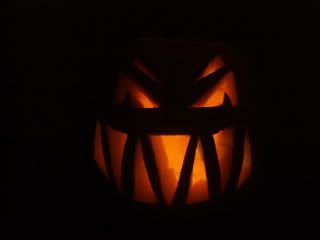
Well Happy Halloween&Samhain to all! There are indeed numerous articles that can be written about this ancient pastoral and agricultural festival that marked the passing of summer, and preparation for winter. From the role it played into the evolution to Halloween, and the folk customs that spread from the Gaelic, to the New World, and celebrated by pagans throughout the world. I think I'll spare another Halloween origin post by reason of there being countless others out there around this time of year. Having already went through the end of autumn anticipation stage, and celebrated our coven Samhain Sabbat, I've decided to share a couple of writings themed for the occasion. For how can a blog exist without poetry eh? Had to happen sooner or later.
Here's one I wrote a couple of years ago.
"Fómhar
Deireadh an tSamhraidh
Summer scented serenity Falls into crisp Autumn memories
Transformation, the cold air around the fields shedding vitality brings me tranquility
It’s this fresh breeze that brings my mind to ease
Deireadh Fómhair, Transformation, Reflection, Warmth, Indulgence. My affection follows the path of least resistance
Mo Bhean Chéile, Mo Thuath, Mo Chairde
To these my affection as warm in my stomach as the burn of Cider
As equal the fruits reaped as the deeds done unto me. Compassion the wine of this Season.
For we are never as alive, as before we Die
This is no lie, at the stars is the answer to find
As active the ocean of blackness above, as the rolling colours below
Alive in the frenzy of the bees, in the Red Giant’s rays on my face
Alive until the peak of fury in that clear Starlight night
Transformation. The First Frost
Stillness, Reflection, Dark, Regeneration
We’re from Black, before we fade to Black
In the womb yet once again
The womb of Hearth among family and friends
Tis this Season I adore. For Meán Fómhair was when I was born
A celebration not only to the start of my life
But of that with grá mo chroí agus m’anam, the love of my heart and soul, my wife
The still of the dormant night and howl of the wind is where I find Comfort
At home in the tradition all around me
Alive not only here in their homeland, but my native country
For when there became but one king
“Anocht Oíche Shamna Mongfhinne banda” a chant the children to this day continue to sing
Samhain, Fáilte an Gheimhridh"
And from a recent adoration I wrote to An Mhór-Ríoghain, who we know from myth mated with an Daghdha on the Unshin riverbanks on Samhain before the Cath Tánaiste Maige Tuired.
"Adhartha Morrígna
Go mbeannaítear duit a Mhór-Ríoghain, a bhandia máthair mhór na talún,
Great Queen of do thuatha, and protectress of our clanns.
Oh powerful Goddess known by many names throughout the lands,
At your choosing rain gifts of plenty, or strike fear into the hearts of man.
For you I bring tribute, dispensed from Cóiced na hÉireann,
To the Great One who is also called Danu, Macha, and Badhbh throughout Ireland.
With your Will our kin protect, and enemies' intent plunder,
As I pledge my love and praise to you mighty mother.
From fertility born at Unshin, and patroness of the battlefields of Ulster,
I give to you my undying loyalty, and service mo mháthair.
By my free soul with the blood of my heart I make this oath,
And I do swear my allegiance by the flight of the Crow.
Oh exalted one who has captured the hearts of many,
I kneel at you shrine and inhale the ecstasy of your beauty.
I ask for your blessing offering this awe projecting before me,
Aiding in your worship, the divine act that sets me free.
From your sacred waters, to Uaimh na gCat,
Take my sacrifice and hear my chant.
Under your intoxication, my profound deity,
Great Queen of Sovereignty, An Mhór-Ríoghain I call unto thee!"
Well Happy Halloween&Samhain to all! There are indeed numerous articles that can be written about this ancient pastoral and agricultural festival that marked the passing of summer, and preparation for winter. From the role it played into the evolution to Halloween, and the folk customs that spread from the Gaelic, to the New World, and celebrated by pagans throughout the world. I think I'll spare another Halloween origin post by reason of there being countless others out there around this time of year. Having already went through the end of autumn anticipation stage, and celebrated our coven Samhain Sabbat, I've decided to share a couple of writings themed for the occasion. For how can a blog exist without poetry eh? Had to happen sooner or later.
Here's one I wrote a couple of years ago.
"Fómhar
Deireadh an tSamhraidh
Summer scented serenity Falls into crisp Autumn memories
Transformation, the cold air around the fields shedding vitality brings me tranquility
It’s this fresh breeze that brings my mind to ease
Deireadh Fómhair, Transformation, Reflection, Warmth, Indulgence. My affection follows the path of least resistance
Mo Bhean Chéile, Mo Thuath, Mo Chairde
To these my affection as warm in my stomach as the burn of Cider
As equal the fruits reaped as the deeds done unto me. Compassion the wine of this Season.
For we are never as alive, as before we Die
This is no lie, at the stars is the answer to find
As active the ocean of blackness above, as the rolling colours below
Alive in the frenzy of the bees, in the Red Giant’s rays on my face
Alive until the peak of fury in that clear Starlight night
Transformation. The First Frost
Stillness, Reflection, Dark, Regeneration
We’re from Black, before we fade to Black
In the womb yet once again
The womb of Hearth among family and friends
Tis this Season I adore. For Meán Fómhair was when I was born
A celebration not only to the start of my life
But of that with grá mo chroí agus m’anam, the love of my heart and soul, my wife
The still of the dormant night and howl of the wind is where I find Comfort
At home in the tradition all around me
Alive not only here in their homeland, but my native country
For when there became but one king
“Anocht Oíche Shamna Mongfhinne banda” a chant the children to this day continue to sing
Samhain, Fáilte an Gheimhridh"
And from a recent adoration I wrote to An Mhór-Ríoghain, who we know from myth mated with an Daghdha on the Unshin riverbanks on Samhain before the Cath Tánaiste Maige Tuired.
"Adhartha Morrígna
Go mbeannaítear duit a Mhór-Ríoghain, a bhandia máthair mhór na talún,
Great Queen of do thuatha, and protectress of our clanns.
Oh powerful Goddess known by many names throughout the lands,
At your choosing rain gifts of plenty, or strike fear into the hearts of man.
For you I bring tribute, dispensed from Cóiced na hÉireann,
To the Great One who is also called Danu, Macha, and Badhbh throughout Ireland.
With your Will our kin protect, and enemies' intent plunder,
As I pledge my love and praise to you mighty mother.
From fertility born at Unshin, and patroness of the battlefields of Ulster,
I give to you my undying loyalty, and service mo mháthair.
By my free soul with the blood of my heart I make this oath,
And I do swear my allegiance by the flight of the Crow.
Oh exalted one who has captured the hearts of many,
I kneel at you shrine and inhale the ecstasy of your beauty.
I ask for your blessing offering this awe projecting before me,
Aiding in your worship, the divine act that sets me free.
From your sacred waters, to Uaimh na gCat,
Take my sacrifice and hear my chant.
Under your intoxication, my profound deity,
Great Queen of Sovereignty, An Mhór-Ríoghain I call unto thee!"
Tír gan Teanga, Tír gan Anam
Dé Domhnaigh 30 de Mhí Dheireadh Fómhair 2011
It can be noticed that I feature some of the Irish language on my pages. Although I do have a few Irish speaking personal friends on my social networking sites, including a couple Native Speakers, why else would I put it up if no one else can understand it, especially if the English is usually featured beside it? Well I received my GCSE in Irish courtesy of Belfast's Ceathrún na Gaeltachta, and it's becoming a strengthening 2nd language of mine, that I choose to include in my personal sites. My teachers have also emphasised the need to live a language, and extend it further from the classroom. So...
"Why would a yank want to learn Irish?"
Well other than knowing if people are talking about you in the Gaeltacht, and being able to tell someone else off who doesn't know their national language that calls you a foreigner, there are further interests. Even though I'm a born and bread American, I also happen to be a Gaelic Polytheist, and have an affinity for traditions associated with Gaelic culture on a personal, and religious level. Although Gaeilge-Ársa, and Sean Gaeilge would have been the languages of pagan Ireland, Modern Irish is a living continuation that still carries the ancient's mindset. Besides, I'm a Traditionalist, so what better way to do my part to preserve traditions native to the land in which I currently reside.
"But no one even speaks it."
Even though Irish is an official language of the Reublic of Ireland, and an official recognised regional language of the United Kingdom, English remains the dominant language of the island outside of the small Irish speaking bilingual districts of the Gaeltacht. Although it's mandatory to learn in public schools in the ROI, few other than native speakers continue its use outside of the class room. As a modern Western society Ireland is, some even believe the language contributes to the stigma behind traditional Irish culture, due to old, negative stereotypes .
With this said, it's believed 1 out of every 10 students forced to learn it actually develop a passion for the language, which has lead to an increasing number of Urban speakers outside of the Gealtacht. In Northern Ireland, Belfast itself has the highest concentration of Irish speakers outside of the Gaeltacht, currently with 44 Naíscoileanna(nurseries), 32 Bunscoileanna(primary schools), and 2 Mheánscoileanna(secondary schools) that teach specifically through the medium ship of Irish. It has it's own Gaeltacht quarter, An Cheathrún Gaeltachta, and with community radio stations such as Raidió Fáilte, and spreading Irish culture centres like An Chultúrlann, and An Droichead, it's easier now to become familiar with the language than ever before. Because of this, Irish is a language that I hear and use on at least a weekly basis, and can be heard anywhere in na Ceathrún Gealtachta, that also extends to Bank Square in the City Centre.
Outside of NI, and the ROI, there has also been an increased interest in the language in countires such as England, the USA, Canada, Australia, and France. Many people from these countries can be found online trying to learn the language on Irish networking sites. This may be because of these country's history of diaspora Irish immigrants, and
as a matter of fact, it was in my home town of St. Louis, MO that I first heard the language spoken. This all makes for a promising future(hopefully) for an teanga Ghaeilge.
It can be noticed that I feature some of the Irish language on my pages. Although I do have a few Irish speaking personal friends on my social networking sites, including a couple Native Speakers, why else would I put it up if no one else can understand it, especially if the English is usually featured beside it? Well I received my GCSE in Irish courtesy of Belfast's Ceathrún na Gaeltachta, and it's becoming a strengthening 2nd language of mine, that I choose to include in my personal sites. My teachers have also emphasised the need to live a language, and extend it further from the classroom. So...
"Why would a yank want to learn Irish?"
Well other than knowing if people are talking about you in the Gaeltacht, and being able to tell someone else off who doesn't know their national language that calls you a foreigner, there are further interests. Even though I'm a born and bread American, I also happen to be a Gaelic Polytheist, and have an affinity for traditions associated with Gaelic culture on a personal, and religious level. Although Gaeilge-Ársa, and Sean Gaeilge would have been the languages of pagan Ireland, Modern Irish is a living continuation that still carries the ancient's mindset. Besides, I'm a Traditionalist, so what better way to do my part to preserve traditions native to the land in which I currently reside.
"But no one even speaks it."
Even though Irish is an official language of the Reublic of Ireland, and an official recognised regional language of the United Kingdom, English remains the dominant language of the island outside of the small Irish speaking bilingual districts of the Gaeltacht. Although it's mandatory to learn in public schools in the ROI, few other than native speakers continue its use outside of the class room. As a modern Western society Ireland is, some even believe the language contributes to the stigma behind traditional Irish culture, due to old, negative stereotypes .
With this said, it's believed 1 out of every 10 students forced to learn it actually develop a passion for the language, which has lead to an increasing number of Urban speakers outside of the Gealtacht. In Northern Ireland, Belfast itself has the highest concentration of Irish speakers outside of the Gaeltacht, currently with 44 Naíscoileanna(nurseries), 32 Bunscoileanna(primary schools), and 2 Mheánscoileanna(secondary schools) that teach specifically through the medium ship of Irish. It has it's own Gaeltacht quarter, An Cheathrún Gaeltachta, and with community radio stations such as Raidió Fáilte, and spreading Irish culture centres like An Chultúrlann, and An Droichead, it's easier now to become familiar with the language than ever before. Because of this, Irish is a language that I hear and use on at least a weekly basis, and can be heard anywhere in na Ceathrún Gealtachta, that also extends to Bank Square in the City Centre.
Outside of NI, and the ROI, there has also been an increased interest in the language in countires such as England, the USA, Canada, Australia, and France. Many people from these countries can be found online trying to learn the language on Irish networking sites. This may be because of these country's history of diaspora Irish immigrants, and
as a matter of fact, it was in my home town of St. Louis, MO that I first heard the language spoken. This all makes for a promising future(hopefully) for an teanga Ghaeilge.
Friday, 2 April 2010
Draíochta i dTraidisiúin Gaelach(Magic(k) in Irish Tradition
Dé hAoine 2 lá de Mhí Aibreáin 2010
Ireland is often described as a "magical place" in literature, and modern tourist brochures. Those words are indeed hard to separate from the landscape, mythology, literature, and poems that have been expressed by so many writers produced by this unique island. Magic is a term open to personal interpretation to many people, with a wide range of definitions under its label. More specifically, I'm here to describe its role in Irish paganism.
Magic(k) can be viewed in correlation with religion, a secular art no different from playing the harp, or plain superstitious nonsense. Regardless of how it's viewed, it remains a practice included by many pagan, and neo-pagan religions and spiritualities. Some cultures have held its crafters in high regard, and others have deemed it a hubris, impious art. With regards to paganism, it has become the face of so many forms of occult& popular neo-pagan paths, that others have felt a strong need to disassociate with its use&term, that don't identify with it. In regards to Irish tradition, I've noticed a trend in so many Celtic Reconstructionist paths, to avoid anything remotely close to it, in an effort to dissociate with other forms of paganism like Wicca, that have popularised its use, whilst overlooking strong elements of Irish tradition in the process. I'm going to explore its use among Irish tradition, in more detail....
First of all, with all of the definitions around for magic(k), the most commonly used definition for magic today, is that coined by the famous occultist, Aleister Crowley, " Magic(k) is the Science and Art of causing Change to occur in conformity with Will."
Crowley added the extra "k," in his own words from Book 4,," The old spelling MAGICK has been adopted throughout in order to distinguish the Science of the Magi from all its counterfeits," thus distinguishing it from the illusionary trickery of stage magic. It was under this form, that it was said to have been created in the East among the Magi priests of pre-Semetic&Aryan times, associated with Zoroaster. Irish scholar and leader of Irish Literacy Revival, T.W. Rolleston, explains more about its roots with the Celts on page 33 of the section, The Religion of Magic, under the chapter,The Religion of The Celts, in his book, Celtic Myths and Legends...
"The first magicians were those who attained a special knowledge of healing or poisonous herbs; but "virtue" of some sort being attributed to every natural object and phenomenon, a kind of magical science, partly the child of true research, partly of poetic imagination, partly of priest-craft, would in time spring up, would be codified into rites and formulas, attached to special places and objects, and represented by symbols"...and further summing up Pliny's take on it, "Magic was not-so Pliny believed-indigenous either in Greece or Italy, but was so much at home in Britain and conducted with such elaborate ritual, that Pliny says it would almost seem as if it was they who taught it to the Persians, not the Persians to them."
Druid is a term used interchangeably(often mistakenly) among groups of the learned sect of Ireland, that ranged from poets, philosophers, doctors, lawyers, priests, and magicians. Strabo stated in Greek that, "Among all the tribes, generally speaking, there are three classes of men held in special honour; the bárdoi, the ováteis, and the druídai."
Dáithí Ó hÓgáin, professor at University College Dublin, who was awarded the Irish Fleadh Cheoil na hÉireann award Ard Ollaibh for lifelong service to Irish traditions, explains on page 80-81 in his book The Sacred Isle: Belief And Religion In Pre-Christian Ireland...
"Celtic scholars are agreed that the proper forms of these three words are bardi, vátes, and druis. In Irish they are well attested as bard (a term for a minor poet or reciter), fáidh (a prophet) and druí (a druid or magician)"
He further states," "the simplest, and yet the most telling, evidence for the supernatural skills of the druids in ancient Ireland is furnished by the word for druidry itself, druídecht. This (in modern spelling draíocht) has always been the ordinary term in Irish for magic."
Being members of the priestly caste, as well held in high regards in other positions of society, the druids were looked upon as the intermediaries of the supernatural, and of the Gods&man. There are those that believe that magic is a word of Christian propaganda used to make any pre-Christian Irish tradition appear heathen and sinful. However, The Irish language constantly updates itself, and there are people that make a good living in charge of coming up with new words in Modern Irish such as gluaisteáníocht(motoring), and bogearraí ríomhaire)computer software. If indeed the term was outdated, then it would seem unlikely for it to appear in Foclóir Gaeilge-Béarla by Niall Ó DÓnaill, the "Bible" modern Irish-English dictionary referred to by some many teachers of the language, on page 441,"
draíocht, f.(gs&pl.~a) 1.Druidic art, druidism Lit.~a druadh, druidic arts. 2. Witchcraft, magic; charm, enchantment."
The Christian resentment is attested in other elements, as Francis J. Byrne; Emeritus Professor of Early Irish History at University College Dublin, puts in his book Irish Kings and High-Kings on page 13, " The Irish word Druí (plural Druíd), is usually rendered magus in Hiberno Latin texts, where druids often figure as opponents of Patrick and other saints". This was kept in mind during the áes dána Irish law. When bishops and lectors took over the druidic roles with the triumph of Christianity. It affected the social structure to where, as Byrne continues, "The ollam or highest degree among the learned caste, was equal in legal status to a king or bishop. The ollam inherited the mantle of the ancient druid, but the druí as such, the practitioner of magic, was degraded under the new dispensation to unfree status."
There's no hiding the belief and importance of magick in the legends, cast all over the island by the Gods, otherworld entities, and man. Mythic figures such as the Druid Cathbhadh of the Ulster Cycle, and the Witch Fedelm "Red Mare", daughter of Móethaire linked with written references to palmistryin pseudo hagiological tracts are found constantly weaving their spells in the myths. The seer warrior heros, Finn mac Cumhaill, and Cú Chulainn, were even hinted at possessing such occult knowledge themselves. A warrior killed by the hand of Cú Chulainn, Cailtín, had children that were sent abroad to study magick as far as Babylon under the order of Queen Meadhbh, in order to come back and avenge their father by supernatural means.
Aside from the mythology, Irish literature going back to the early 7th century refers to the file, druí, and fáidh to have an extensive sort of magical, antiquarian knowledge called imbas. To distinguish these practices considered "magickal", from others not containing to another definition of magick, these are practices that are indeed examples of causing change to occur with conformity of will. We read of rites such as imbas forosnaí where the druid discovers any knowledge that he wills. There were charms and spells for almost every facet of life, from banishing uncomfortable ailments, to discovering the identity of cattle thieves. Other skills like the imbas forosnaí, such as teinmlaída, and díchetal do chennaibh, were essential to every ollamh, and druí. The Fíle were believed to have the ability to compose powerful praises, and satires, that were even said to have the ability to cause men to fall ill or die with a justifiable composition. Their skills weren't even limited the battle field, another examples in literature are making of glam díched to Lugh, while "calling on the 'strong druidic skills' to destroy the enemy through the forces of the sky and soil, sun and moon" appears.
This ancient, almost ignorant belief of effective destruction magic was a reality, so much so that it was actually believed that the druids had control over the elements, to an exaggerated extent that Christian missionaries used a propaganda with claims that the druids stated that they created, “heaven and earth, sea, sun, and moon” themselves.
The magickal persona of poets survived the advent of Christianity, all the way down to recent times. Their status was about equal with the bishops, and it is believed that they preserved much of the druidic traditions under this guise. It was believed they had the ability to even satirise down the kings themselves, and pg. 12 of Ó hÓgáin's Irish Superstitions, " Medieval Irish literature claims that poets had two capsules on their tongues-one full of honey for praising, the other full of poison for satirising." This of course resembles the dual nature of the poetic skills, moladh agus aoir, praise&satire. Folk magick preserves folk thought of the ancient world, all the way down to the last traditional refuges of na Gealtachta, where charms and curses centered around crops, livestock, and around blessing&cursing stones still linger. The Carmina Gadelica is a book of Gaelic prayers, hymns, charms, incantations, blessings, runes, collected in the Highland of Scotland. The traditions are of Christian nature, however the pagan origins are obvious, with the exact words curse, charm, and incantation used in a Christian context, translated from Gàidhlig.
Other paths within Celtic Spirituality have rejected the use of magic because of its link with neo-paganism, and ceremonoal magick, such as casting circles, and calling quarters. However any learned practitioner of such will tell you that these practices are ancient in origin. Evocations are in a way no different from the glam díched, a sort of ritual posture described above, when invoking Lugh. Circles are universal tools in many cultures, with neolithic stone ones used in magico-religious ritual obvious all over this island. Referring back to The Sacred Isle...
"The form of a circle occurs widely in magic and religion as a protective device, or a technique for emotionally controlling the cosmos. It is therefore not hard to imagine that those who constructed these circles in Ireland would assemble within them on certain occasions in order to gain ritual protection for their communal, and perhaps individual welfare...when circumambulation is employed in ritual practice, it is considered correct to move in the same direction as the sun."
This Irish custom occurs in many folk traditions, and the direction sunwise, deiseal, referring back to Foclóir Gaeilge-Béarla, " deiseal, m(gs.-sil 1. Righthand directio, direction of the sun." This is course being the root of the British Witchcraft's Deosil.
Celtic paganism is open to personal interpretation due to virtually no written records of primary sources regarding religion. However written second hand sources, etymology, native vernacular, and probable archaeological evidence indicate magic was, and is, present in Ireland, and was used to a certain extent in pre-Christian religious rituals.
Ireland is often described as a "magical place" in literature, and modern tourist brochures. Those words are indeed hard to separate from the landscape, mythology, literature, and poems that have been expressed by so many writers produced by this unique island. Magic is a term open to personal interpretation to many people, with a wide range of definitions under its label. More specifically, I'm here to describe its role in Irish paganism.
Magic(k) can be viewed in correlation with religion, a secular art no different from playing the harp, or plain superstitious nonsense. Regardless of how it's viewed, it remains a practice included by many pagan, and neo-pagan religions and spiritualities. Some cultures have held its crafters in high regard, and others have deemed it a hubris, impious art. With regards to paganism, it has become the face of so many forms of occult& popular neo-pagan paths, that others have felt a strong need to disassociate with its use&term, that don't identify with it. In regards to Irish tradition, I've noticed a trend in so many Celtic Reconstructionist paths, to avoid anything remotely close to it, in an effort to dissociate with other forms of paganism like Wicca, that have popularised its use, whilst overlooking strong elements of Irish tradition in the process. I'm going to explore its use among Irish tradition, in more detail....
First of all, with all of the definitions around for magic(k), the most commonly used definition for magic today, is that coined by the famous occultist, Aleister Crowley, " Magic(k) is the Science and Art of causing Change to occur in conformity with Will."
Crowley added the extra "k," in his own words from Book 4,," The old spelling MAGICK has been adopted throughout in order to distinguish the Science of the Magi from all its counterfeits," thus distinguishing it from the illusionary trickery of stage magic. It was under this form, that it was said to have been created in the East among the Magi priests of pre-Semetic&Aryan times, associated with Zoroaster. Irish scholar and leader of Irish Literacy Revival, T.W. Rolleston, explains more about its roots with the Celts on page 33 of the section, The Religion of Magic, under the chapter,The Religion of The Celts, in his book, Celtic Myths and Legends...
"The first magicians were those who attained a special knowledge of healing or poisonous herbs; but "virtue" of some sort being attributed to every natural object and phenomenon, a kind of magical science, partly the child of true research, partly of poetic imagination, partly of priest-craft, would in time spring up, would be codified into rites and formulas, attached to special places and objects, and represented by symbols"...and further summing up Pliny's take on it, "Magic was not-so Pliny believed-indigenous either in Greece or Italy, but was so much at home in Britain and conducted with such elaborate ritual, that Pliny says it would almost seem as if it was they who taught it to the Persians, not the Persians to them."
Druid is a term used interchangeably(often mistakenly) among groups of the learned sect of Ireland, that ranged from poets, philosophers, doctors, lawyers, priests, and magicians. Strabo stated in Greek that, "Among all the tribes, generally speaking, there are three classes of men held in special honour; the bárdoi, the ováteis, and the druídai."
Dáithí Ó hÓgáin, professor at University College Dublin, who was awarded the Irish Fleadh Cheoil na hÉireann award Ard Ollaibh for lifelong service to Irish traditions, explains on page 80-81 in his book The Sacred Isle: Belief And Religion In Pre-Christian Ireland...
"Celtic scholars are agreed that the proper forms of these three words are bardi, vátes, and druis. In Irish they are well attested as bard (a term for a minor poet or reciter), fáidh (a prophet) and druí (a druid or magician)"
He further states," "the simplest, and yet the most telling, evidence for the supernatural skills of the druids in ancient Ireland is furnished by the word for druidry itself, druídecht. This (in modern spelling draíocht) has always been the ordinary term in Irish for magic."
Being members of the priestly caste, as well held in high regards in other positions of society, the druids were looked upon as the intermediaries of the supernatural, and of the Gods&man. There are those that believe that magic is a word of Christian propaganda used to make any pre-Christian Irish tradition appear heathen and sinful. However, The Irish language constantly updates itself, and there are people that make a good living in charge of coming up with new words in Modern Irish such as gluaisteáníocht(motoring), and bogearraí ríomhaire)computer software. If indeed the term was outdated, then it would seem unlikely for it to appear in Foclóir Gaeilge-Béarla by Niall Ó DÓnaill, the "Bible" modern Irish-English dictionary referred to by some many teachers of the language, on page 441,"
draíocht, f.(gs&pl.~a) 1.Druidic art, druidism Lit.~a druadh, druidic arts. 2. Witchcraft, magic; charm, enchantment."
The Christian resentment is attested in other elements, as Francis J. Byrne; Emeritus Professor of Early Irish History at University College Dublin, puts in his book Irish Kings and High-Kings on page 13, " The Irish word Druí (plural Druíd), is usually rendered magus in Hiberno Latin texts, where druids often figure as opponents of Patrick and other saints". This was kept in mind during the áes dána Irish law. When bishops and lectors took over the druidic roles with the triumph of Christianity. It affected the social structure to where, as Byrne continues, "The ollam or highest degree among the learned caste, was equal in legal status to a king or bishop. The ollam inherited the mantle of the ancient druid, but the druí as such, the practitioner of magic, was degraded under the new dispensation to unfree status."
There's no hiding the belief and importance of magick in the legends, cast all over the island by the Gods, otherworld entities, and man. Mythic figures such as the Druid Cathbhadh of the Ulster Cycle, and the Witch Fedelm "Red Mare", daughter of Móethaire linked with written references to palmistryin pseudo hagiological tracts are found constantly weaving their spells in the myths. The seer warrior heros, Finn mac Cumhaill, and Cú Chulainn, were even hinted at possessing such occult knowledge themselves. A warrior killed by the hand of Cú Chulainn, Cailtín, had children that were sent abroad to study magick as far as Babylon under the order of Queen Meadhbh, in order to come back and avenge their father by supernatural means.
Aside from the mythology, Irish literature going back to the early 7th century refers to the file, druí, and fáidh to have an extensive sort of magical, antiquarian knowledge called imbas. To distinguish these practices considered "magickal", from others not containing to another definition of magick, these are practices that are indeed examples of causing change to occur with conformity of will. We read of rites such as imbas forosnaí where the druid discovers any knowledge that he wills. There were charms and spells for almost every facet of life, from banishing uncomfortable ailments, to discovering the identity of cattle thieves. Other skills like the imbas forosnaí, such as teinmlaída, and díchetal do chennaibh, were essential to every ollamh, and druí. The Fíle were believed to have the ability to compose powerful praises, and satires, that were even said to have the ability to cause men to fall ill or die with a justifiable composition. Their skills weren't even limited the battle field, another examples in literature are making of glam díched to Lugh, while "calling on the 'strong druidic skills' to destroy the enemy through the forces of the sky and soil, sun and moon" appears.
This ancient, almost ignorant belief of effective destruction magic was a reality, so much so that it was actually believed that the druids had control over the elements, to an exaggerated extent that Christian missionaries used a propaganda with claims that the druids stated that they created, “heaven and earth, sea, sun, and moon” themselves.
The magickal persona of poets survived the advent of Christianity, all the way down to recent times. Their status was about equal with the bishops, and it is believed that they preserved much of the druidic traditions under this guise. It was believed they had the ability to even satirise down the kings themselves, and pg. 12 of Ó hÓgáin's Irish Superstitions, " Medieval Irish literature claims that poets had two capsules on their tongues-one full of honey for praising, the other full of poison for satirising." This of course resembles the dual nature of the poetic skills, moladh agus aoir, praise&satire. Folk magick preserves folk thought of the ancient world, all the way down to the last traditional refuges of na Gealtachta, where charms and curses centered around crops, livestock, and around blessing&cursing stones still linger. The Carmina Gadelica is a book of Gaelic prayers, hymns, charms, incantations, blessings, runes, collected in the Highland of Scotland. The traditions are of Christian nature, however the pagan origins are obvious, with the exact words curse, charm, and incantation used in a Christian context, translated from Gàidhlig.
Other paths within Celtic Spirituality have rejected the use of magic because of its link with neo-paganism, and ceremonoal magick, such as casting circles, and calling quarters. However any learned practitioner of such will tell you that these practices are ancient in origin. Evocations are in a way no different from the glam díched, a sort of ritual posture described above, when invoking Lugh. Circles are universal tools in many cultures, with neolithic stone ones used in magico-religious ritual obvious all over this island. Referring back to The Sacred Isle...
"The form of a circle occurs widely in magic and religion as a protective device, or a technique for emotionally controlling the cosmos. It is therefore not hard to imagine that those who constructed these circles in Ireland would assemble within them on certain occasions in order to gain ritual protection for their communal, and perhaps individual welfare...when circumambulation is employed in ritual practice, it is considered correct to move in the same direction as the sun."
This Irish custom occurs in many folk traditions, and the direction sunwise, deiseal, referring back to Foclóir Gaeilge-Béarla, " deiseal, m(gs.-sil 1. Righthand directio, direction of the sun." This is course being the root of the British Witchcraft's Deosil.
Celtic paganism is open to personal interpretation due to virtually no written records of primary sources regarding religion. However written second hand sources, etymology, native vernacular, and probable archaeological evidence indicate magic was, and is, present in Ireland, and was used to a certain extent in pre-Christian religious rituals.
Subscribe to:
Posts (Atom)
